
If you are a civil engineer and wish to build your career in a foreign country Canada is one of the top destinations to look for. This is because Canada is in a constant need for infrastructure development and is growing in size, and civil engineers are in great demand. If you are thinking of how can I migrate to Canada as a Civil Engineer, this blog will help you in a simple and easy way.
Why Canada Needs Civil Engineers
The Canadian government is spending large amounts of money on building infrastructure projects that include roads and bridges and housing and smart city development. The construction industry needs civil engineers to work in Ontario and British Columbia and Alberta and Saskatchewan.
The job market regularly requires professionals who work as site engineers and structural engineers and project managers and construction planners. The demands of civil engineering work make it a suitable choice for people who want to immigrate.
Best Immigration Pathways for Civil Engineers
Canada provides several migration routes that match your personal profile because there is more than one path to immigration.
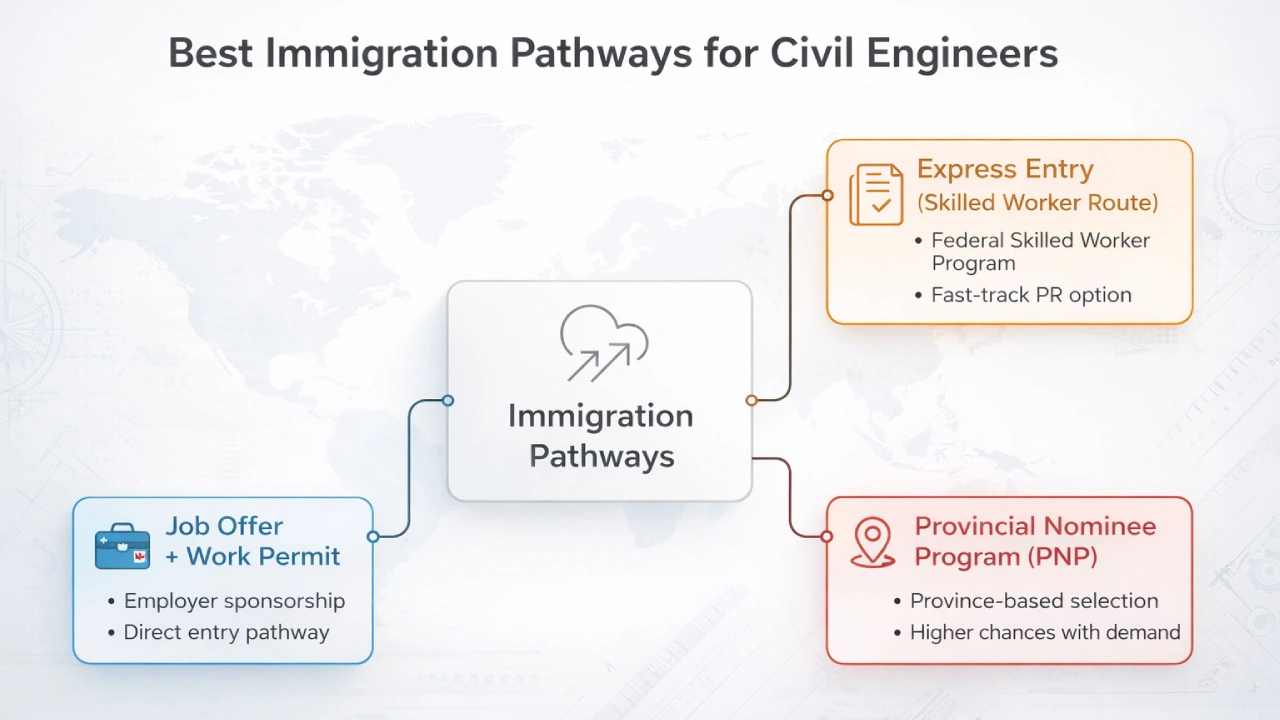
1. Express Entry (Skilled Worker Route)
The Federal Skilled Worker Program allows most people to use Express Entry as their main immigration method. Your civil engineering profession allows you to work in skilled positions which provides you with a significant benefit.
To apply, you’ll need –
● A valid IELTS score
● Educational Credential Assessment (ECA)
● Work experience in civil engineering
● A competitive CRS score
You will receive an Invitation to Apply (ITA) for permanent residency if your score meets the required threshold.
2. Provincial Nominee Program (PNP)
Civil engineers are in high demand across many Canadian provinces which specifically recruit this profession. Your chances of getting permanent resident status improve when a province nominates you because you receive extra CRS points.
PNPs are especially useful if your CRS score is slightly lower.
3. Job Offer + Work Permit
A Canadian employer will provide you with permanent residency through an employment offer which you must first secure. You can obtain a work permit after receiving an employment offer which will lead to your path toward becoming a permanent resident.
International construction and engineering companies in Canada usually recruit overseas workers to fill positions in their major development projects.
What Qualifications Do You Need?
To improve your chances, you should have –
● A degree in Civil Engineering or a related field
● Relevant work experience (preferably 2+ years)
● Good English language skills
● Knowledge of tools like AutoCAD, STAAD, or project management software
You need to acquire provincial engineering licenses which include P.Eng for specific regulated work roles although you can begin your career in related areas before obtaining full licensing.
Steps to Start Your Migration Journey
This is a basic approach you can follow –
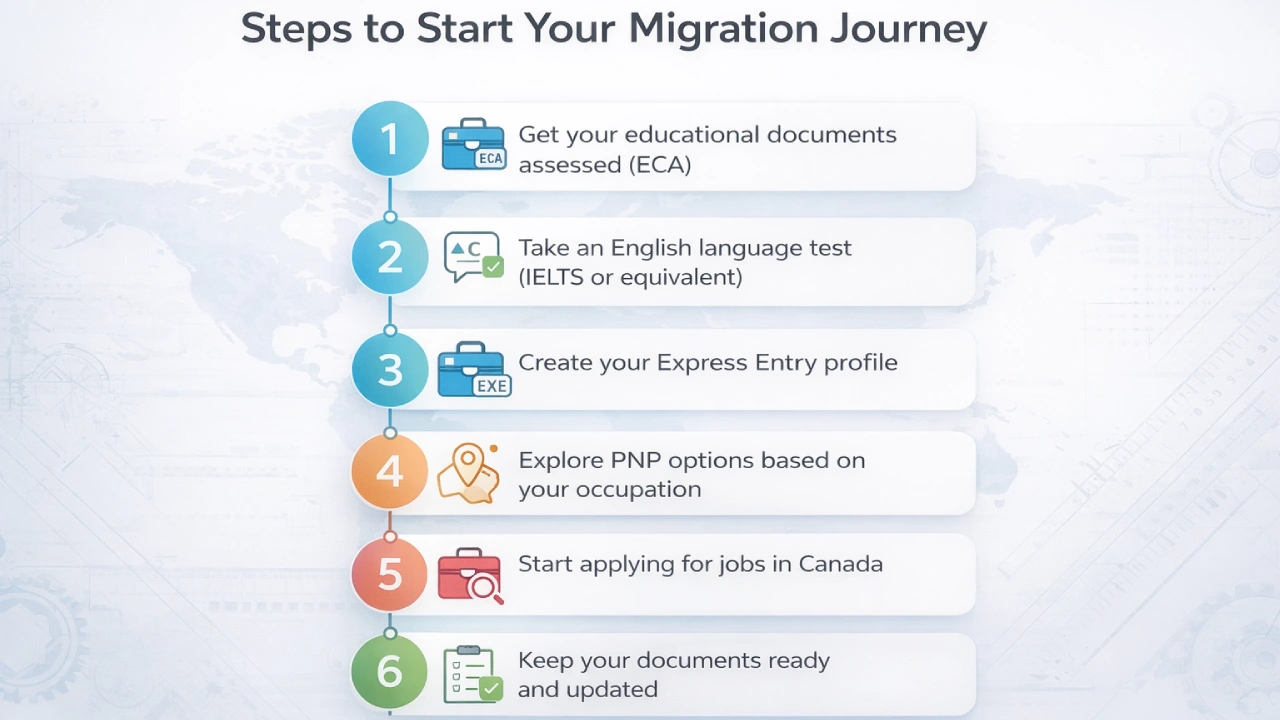
1. Get your educational documents assessed (ECA)
2. Take an English language test (IELTS or equivalent)
3. Create your Express Entry profile
4. Explore PNP options based on your occupation
5. Start applying for jobs in Canada
6. Keep your documents ready and updated
Taking these steps early can speed up your process
Challenges You Should Know
Like any immigration process, there are some challenges
● High CRS score requirements
● Competition from other skilled applicants
● Understanding licensing requirements
But proper planning with details can help you solve these problems
How VisaforNation Can Help
VisaforNation is here to help civil engineers by providing the best possible solution based on your situation. We are here to assist you from the very start until we determine your eligibility until we finish the process by giving you the appropriate documents. We are here to
give you appropriate advice to ensure that your work continues without interruptions.
Conclusion
So, how do I migrate to Canada as a Civil Engineer? The answer is simple: the right pathway, the right profile, the right strategic approach. Civil Engineers are in great demand in the infrastructure and construction sectors of the Canadian economy.
With the expert guidance of VisaforNation, your path to work and settle in Canada becomes easier.
Thanks for breaking down the migration process so clearly—especially the part about Canada’s ongoing infrastructure demand. As a civil engineer, it’s reassuring to know that there are structured pathways like Express Entry that recognize our skills. Your mention of the CRS score and ECA requirements really helps set realistic expectations for those considering this move.
Canada is definitely an appealing destination for civil engineers, especially with its ongoing infrastructure boom. With your tips on getting the right credentials, it seems like a well-planned strategy for those looking to move. Can you elaborate on the job prospects in smaller provinces or regions outside of the major urban centers?