Canada keeps its position as the place where the international students, workers and
immigrants wish to come and settle. Furthermore, the number of visa denials has grown at
the same time. Consequently, the question arises, Why Do Canada Visa Applications Fail
in 2026? The question has become really important since Immigration, Refugees and
Citizenship Canada (IRCC) is applying each application to tighter scrutiny, better data
checks and more detailed reviews of eligibility. Even those mistakes that are actually
preventable and done by applicants who already satisfy the basic criteria are among the
reasons for refusals.
Common Causes of Canada Visa Application Failure in 2026
In the year 2026, the foremost reason for getting a visa refusal is not only the issue of
eligibility but the manner in which an applicant established their trustworthiness, financial
capacity and true purpose. Canadian immigration has transitioned to quality and
compliance, which implies that the entire application is exhaustively verified.
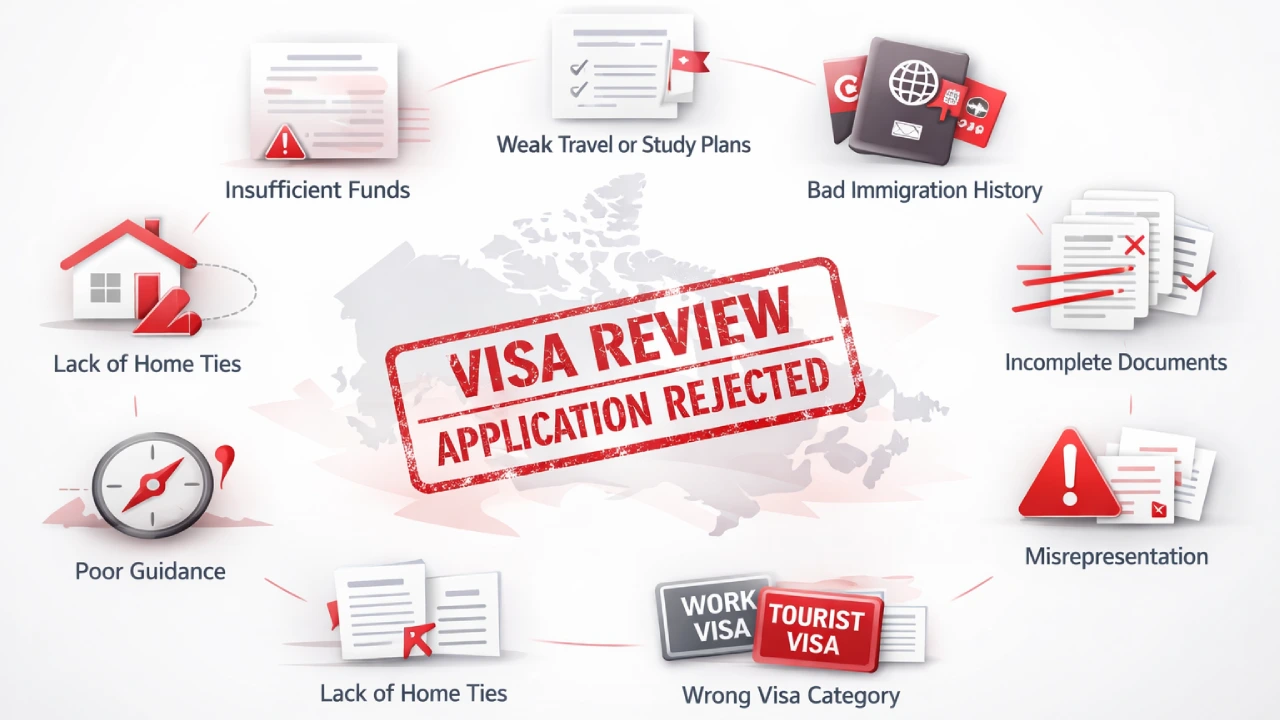
1. Insufficient or Unclear of Funds
One of the main prerequisites for applying to Canada is that the candidate must prove
he/she is able to take care of their finances. Starting with 2026, the IRCC is looking into bank
histories, sources of income and spending habits much more than ever before. Thus, the
applications –
● They are rejected because of the sudden deposit right before the application.
● The income source is not given.
● The bank account and the tuition or living expenses do not match.
The situation might be that the amount is enough but the financial records are unclear
making them suspicious.
2. Weak Reason for Trip or Study Plan
An unconvincing purpose is one of the leading reasons why visa applications to Canada
get rejected in 2026. Studying and visiting visas give very strong reasons for asking about –
● Why Canada?
● Why this particular subject for study or visit?
● How it relates to your past and future
Generic or copy-paste SOPs are very easily spotted and they usually result in rejection.
3. Bad Immigration Record
Unthoughtful applicants like those who have overstayed in other countries, had previous visa
refusals, or breached immigration regulations get more scrutiny. In 2026, global data sharing
has improved the situation and thus IRCC can more easily check past records.
Even a minor issue that happened years ago, if not explained properly, can lead to rejection.
4. Incomplete or Incorrect Documents
A little mistake nowadays can lead to a big problem. The most common issues are –
● Different names or dates
● No employment letters
● Documents that are not valid or expired
Canada has a very strict automated system, and a single inconsistency can result in your file
being marked for refusal.
5. Low Ties to Home Country
The Canadian government needs assurance that temporary visa holders will come back.
Applications are often refused when there is no evidence of –
● Reliable job
● Business ownership
● Family commitments
● Property or financial relations
If the IRCC suspects that there is a possibility for you not to leave Canada after your visa
expires, your application will probably get rejected.
6. Misrepresentation or Inaccurate Information
Errors, even if they are unintentional, are viewed with utmost seriousness. Starting in 2026,
IRCC plans to cross-check applications with banks, schools, employers, and previous visa
records. If anything appears to be untrue or misleading, the application can be refused and
even banned for up to 5 years.
7. Wrong Visa Category Chosen
A lot of applicants submit their applications under the wrong visa type. For instance, a visitor
visa is applied for, while the actual intention is to study or work. Such a mismatch causes
IRCC to doubt your sincerity and thus refuse the application.
8. Inadequate Professional Guidance
A significant number of refusals are caused by the fact that people depend on untrustworthy
agents or attempt to file their cases themselves without fully understanding the Canadian
immigration laws. Every visa category has its own requirements, and a little oversight can
cost you months and thousands of rupees.
How to Avoid Canada Visa Rejection in 2026
If you are anxious about the issue of why Canada visa applications fail in 2026, the key to
it is in the preparation and honesty. Following are the ways to enhance your chances –
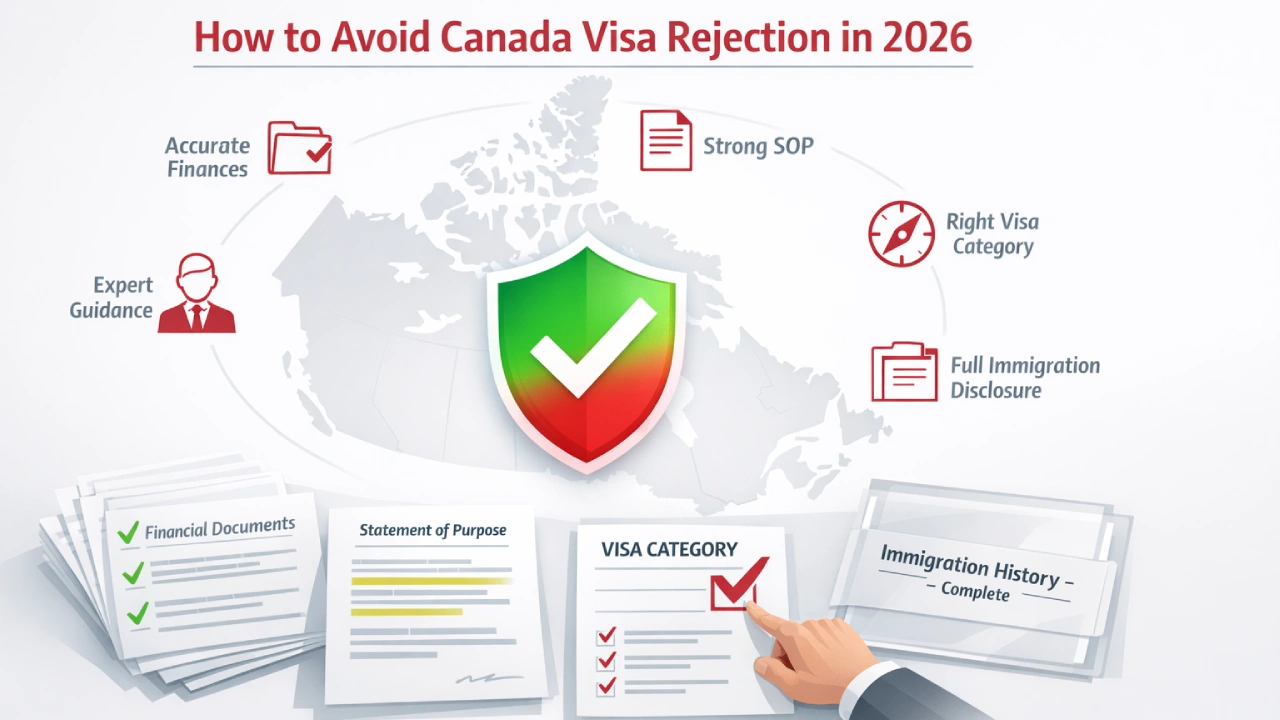
● Maintain your financial documents neat and true
● Prepare a strong, individualized SOP
● Choose the right visa category to apply under
● Reveal your entire immigration history
● Seek expert help before application submission
Final Thought
Canada is not refusing applicants in a random manner. The biggest part of the refusals
happens because of not enough documentation, unclear intent or poor planning. If you get to
know the reasons Why Do Canada Visa Applications Fail in 2026, you can fix the
mistakes in advance and thus significantly increase your chances of approval. With a proper
way and honest portrayal, Canada is still one of the friendliest and most opportunity-rich
places on earth.
You May Like:Can Freshers Apply for Canada PR Without a Job Offer?